Quick answer: Tape-in extensions use thin, pre-taped wefts pressed close to the scalp for a fast, flat, lightweight result. They’re best suited to fine or fragile hair. Weft (sew-in) extensions are stitched onto a braided track for maximum volume and a more durable base. They’re best suited to thicker hair or clients chasing serious length. Both methods run on a similar 6 to 8 week maintenance cycle, so the right choice usually comes down to your hair type and how much volume you want, not which one is objectively “better.”
If you’ve been comparing extension methods, you’ve probably noticed most guides either oversell one method or bury the actual differences in jargon. This guide breaks down how tape-in and weft extensions are actually applied, who each one suits, and how to decide between them, based on the two methods we apply every week in the salon.
How Each Method Is Applied
Tape-In Extensions
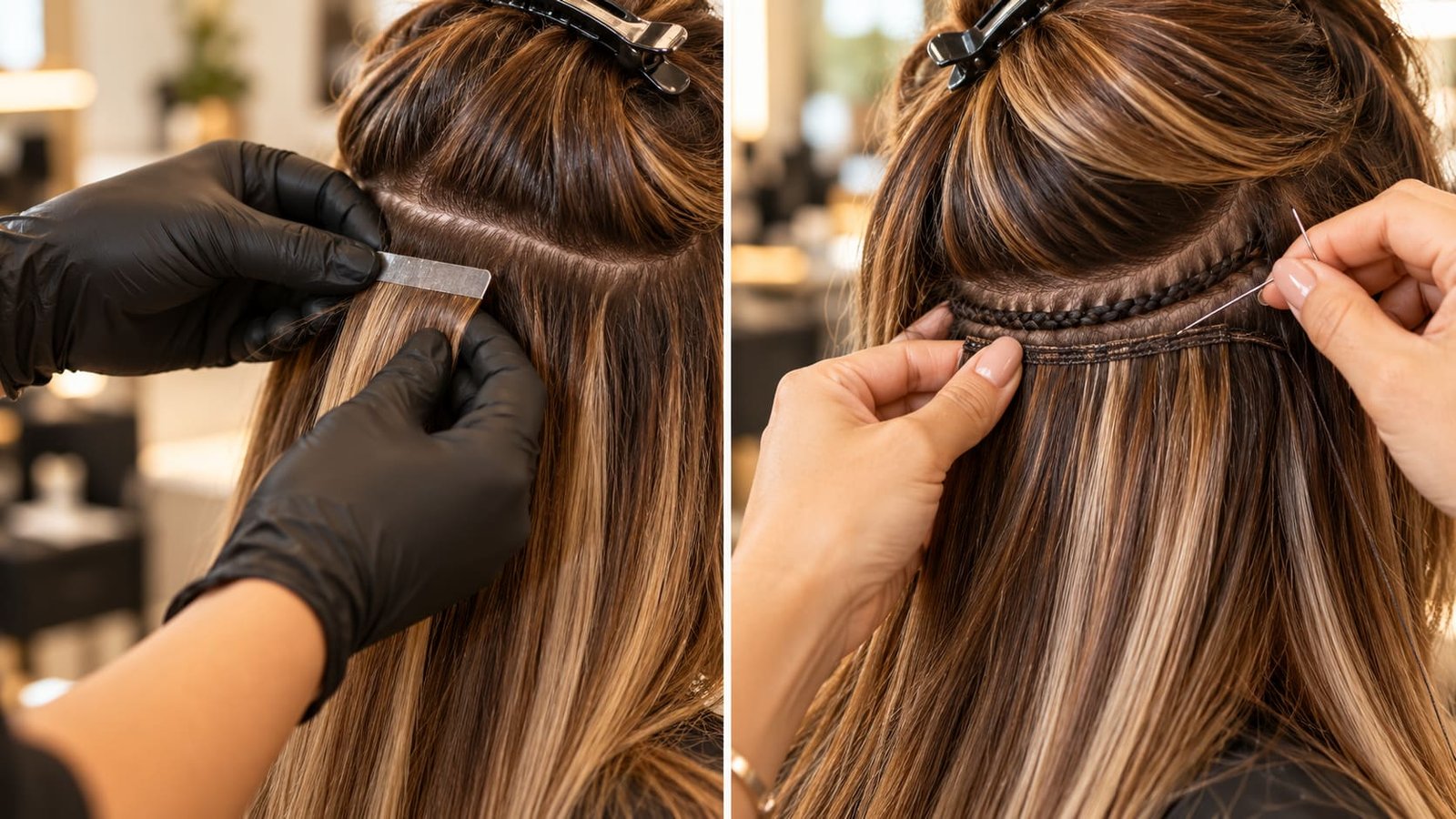
Thin, pre-taped wefts are sandwiched around small sections of your natural hair close to the scalp, using a strong double-sided adhesive. A full set is applied in around an hour, with no heat, braiding, or sewing involved. The result sits flat against the head, which is why tape is popular with clients who want a quick, discreet result without a long salon visit.
Weft (Sew-In) Extensions
Your natural hair is first braided into a flat track close to the scalp, then a wider weft is sewn directly onto that track with a needle and thread. There’s no heat or adhesive involved in a sew-in. The hold comes entirely from the braid and stitching. This takes a little longer in the chair than tape, but creates a very secure base that can carry more hair.
Which Hair Type Suits Each Method?
This is usually the deciding factor, more than personal preference.
Tape Suits Fine or Fragile Hair
Because tape wefts are thin and lie flat, they place minimal weight and tension on each section of natural hair. This makes tape the gentler option for fine, thin, or previously damaged hair, where a heavier method could cause unnecessary strain at the root.
Weft Suits Thicker Hair or Clients Wanting Maximum Volume
A braided track can carry more hair than a tape section can, which is why weft extensions are the go-to when a client wants serious added volume and length, not just a subtle blend. Medium to thick natural hair generally handles the braid and weight more comfortably than very fine hair does.
Maintenance & Wear Time
Both methods run on a similar cycle, with small differences in what the maintenance actually involves.
Tape-In Maintenance
Reapplication every 6 to 8 weeks as your natural hair grows and the tape bonds shift down the hair shaft. Between appointments, avoid applying direct heat too close to the bonds, as this can loosen the adhesive early. The hair itself is typically reusable for 6 to 12 months.
Weft Maintenance
Also a 6 to 8 week cycle, with the braided track moved up as your natural hair grows out beneath it. Because there’s no adhesive to manage, care is more about protecting the braid: gentle brushing from the ends up, and avoiding scrubbing shampoo directly onto the track.
Styling Freedom
Tape wefts sit very flat against the scalp, which looks seamless in most styles but can be more visible in very high ponytails or slicked-back looks, since the flat tape panel can show through at certain angles. Weft tracks, once braided in, generally handle high updos and ponytails more comfortably, since the braid distributes tension more evenly across a wider section of hair.
Tape vs Weft: Side-by-Side
| Tape-In | Weft (Sew-In) | |
|---|---|---|
| Application time | About 1 hour | Longer, braiding plus sewing |
| Attachment method | Double-sided adhesive tape | Needle and thread onto a braided track |
| Best for | Fine, fragile, or thinning hair | Medium to thick hair, maximum volume |
| Feel | Flat, lightweight | Fuller, more volume per track |
| Maintenance cycle | 6 to 8 weeks | 6 to 8 weeks |
| High ponytails/updos | Can show at certain angles | Generally handles these better |
| Heat or adhesive involved | Adhesive tape, no heat | Neither, braid and thread only |
So Which One Should You Choose?
If you have fine or fragile hair and want a quick, low-fuss result ready in about an hour, tape-in extensions are usually the better starting point. If you have medium to thick hair and want maximum volume and length, or you regularly wear high ponytails and updos, weft extensions are typically the stronger fit.
Neither method is objectively better. They solve different problems. The most reliable way to decide is a free consultation, where your stylist can check your natural hair’s thickness and condition before recommending a method.
Frequently Asked Questions
Can I switch from tape to weft extensions later, or vice versa?
Yes, most clients can switch methods at their next appointment, though your stylist will check your natural hair’s condition first since each method places slightly different demands on it.
Which method is more comfortable to sleep in?
Both are comfortable once you’re used to them, provided you tie your hair into a loose braid or low ponytail before bed. Weft tracks sit very securely once braided in, while tape bonds lie flat enough to avoid most pressure points.
Does weft take longer to remove than tape?
Generally yes, since removal involves carefully unpicking the stitching rather than dissolving adhesive, but neither method should ever be removed at home without the right tools.
Will either method damage my natural hair?
When applied and maintained correctly by a trained stylist, both are considered gentle methods. Most damage from either method comes from going too long between reapplications, not from the method itself.
Can I colour-match either method to balayage or highlighted hair?
Yes, both tape and weft hair can be colour-matched to blended or highlighted natural hair, though this should be discussed at your consultation so the right shade is ordered in advance.
Is one method noticeably cheaper than the other?
Pricing depends on the amount of hair used and the length you’re after for both methods, so we confirm exact pricing at a free consultation rather than a flat rate.
Book Your Consultation
Still deciding between tape and weft? A free consultation is the fastest way to find out which method actually suits your hair. Visit our dedicated Tape Hair Extensions or Weft Hair Extensions pages to see real results and book online, or call us on 02 8798 1555.
Share
Related posts