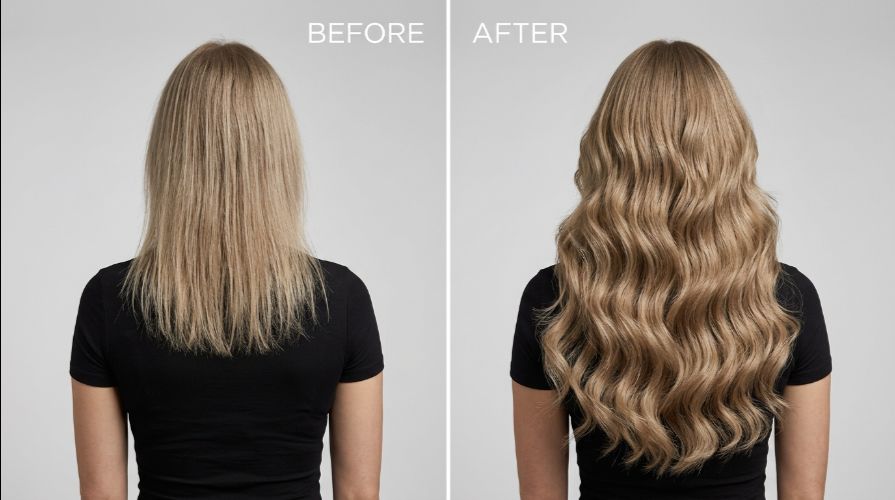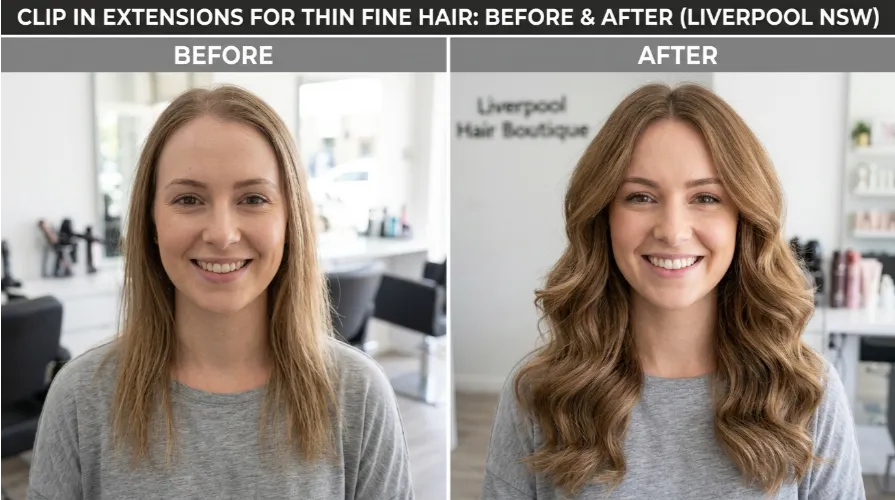
Quick answer: The main hair extension types are clip-in, tape-in, weft (sew-in), halo, and fusion/keratin bond. Clip-ins are the cheapest and easiest to remove yourself; tape-in and weft are semi-permanent salon methods lasting 6 to 9 weeks between maintenance; fusion bonds give the most natural blend but cost the most and take longest to apply. A full head typically needs 3 to 7 packs depending on your length and the method used.
Searching “hair extension types and prices” usually turns up either overly technical breakdowns or vague marketing pages with no real numbers. This guide gives you both: what each method actually is, honest AUD pricing ranges, and how many packs a full head realistically needs — the practical information you need before booking a consultation.
What Are the Main Types of Hair Extensions?
There are five extension methods worth knowing about, each suited to different goals and budgets.
Clip-In Extensions
Wefts with small clips attached, worn only when you want them and removed at the end of the day. No salon appointment required to wear them day-to-day, though professional colour-matching at purchase makes a real difference to how natural they look.
Tape-In Extensions
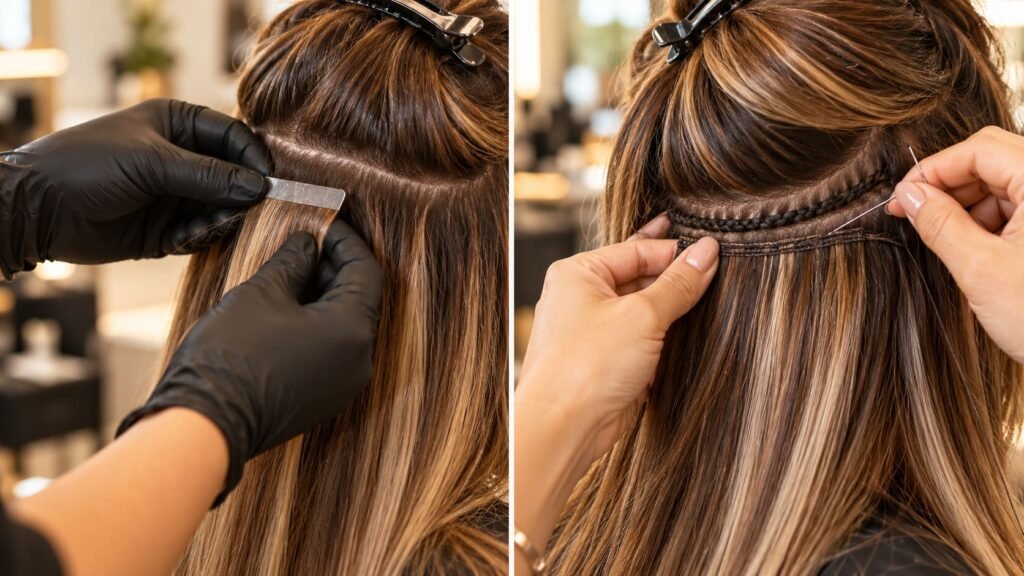
Thin, pre-taped wefts sandwiched around small sections of natural hair, applied by a stylist. They lie flat and are one of the more affordable semi-permanent options — see our full tape-in extensions guide for the application process.
Weft (Sew-In) Extensions
Wefts sewn or micro-bead attached in rows for more density than tape-ins. Suits clients wanting significant volume, with weight distributed across a wider area of the scalp.
Halo Extensions
A single weft on an invisible wire that sits on top of your head like a halo, held in place by your own hair. No clips, tape or bonds involved — it is removed by simply lifting it off, making it the fastest method to put in and take out.
Fusion & Keratin Bond Extensions
Individual strands bonded to small sections of natural hair with a keratin adhesive, applied using heat. The most natural-blending method since bonds are small and precisely placed, though it takes the longest to apply and costs the most per session. Read more in our permanent hair extensions guide for how bonds compare to tape and weft over time.
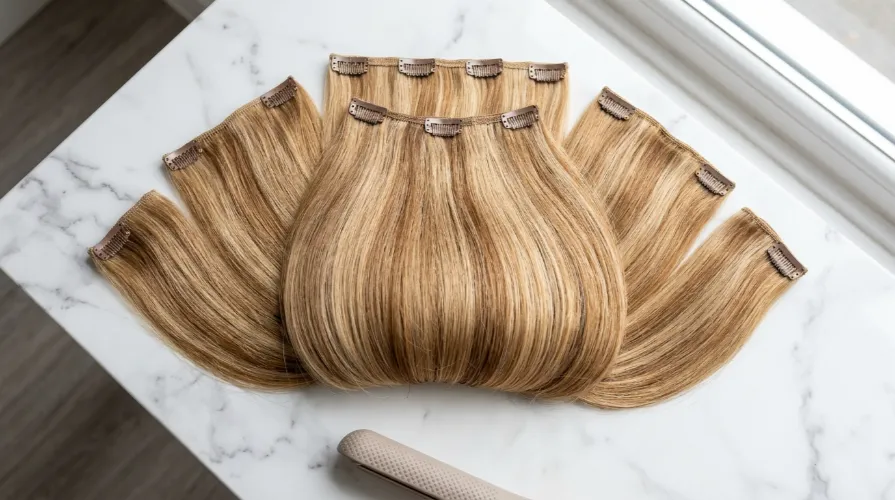
How Much Do Hair Extensions Cost?
Cost depends on the method, hair length, and how many packs your hair needs. Here is a realistic AUD range by type and length.
| Type | 14–16 inches | 18–20 inches | 22–24 inches |
|---|---|---|---|
| Clip-In (full set) | $150 to $220 | $200 to $300 | $260 to $380 |
| Tape-In (per pack, salon-applied) | $120 to $180 | $150 to $220 | $180 to $260 |
| Weft/Sew-In (full head) | $250 to $400 | $320 to $480 | $400 to $600 |
| Halo | $180 to $260 | $220 to $320 | $280 to $400 |
| Fusion/Keratin Bond (full head) | $400 to $650 | $500 to $800 | $650 to $1,000+ |
These are general ranges — your stylist will confirm an exact quote at consultation based on your natural hair density and target look.
How Many Packs Do You Need for a Full Head?
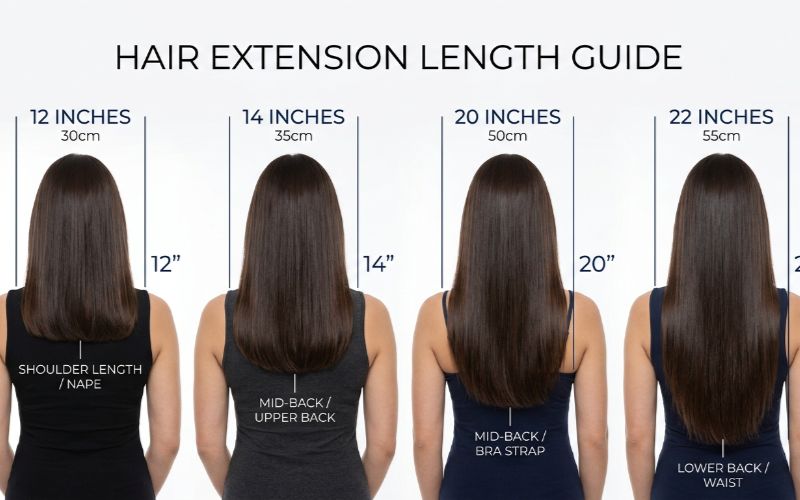
Most clients need 3 to 5 packs of tape-in or clip-in extensions for a natural full-head result, or 5 to 7 for maximum volume. This depends on three things: your starting hair density (thinner hair needs more packs to look full), how much volume you want, and hair length (longer lengths sometimes need slightly fewer packs since each weft covers more visual area).
A consultation is the only reliable way to get an exact pack count — guessing from a size chart alone often leads to over- or under-ordering.
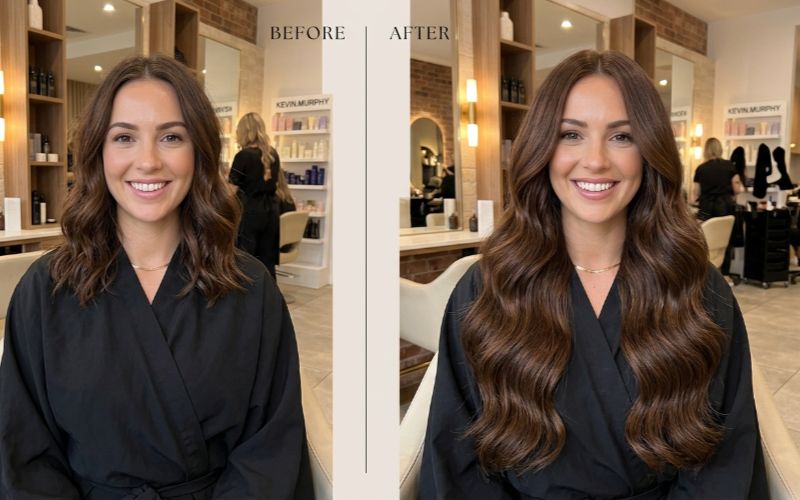
Which Type Should You Choose?
| Priority | Best Choice |
|---|---|
| Lowest cost, no commitment | Clip-in |
| Fine or thinning hair | Tape-in or halo |
| Maximum volume | Weft/sew-in |
| Most natural blend, willing to pay more | Fusion/keratin bond |
| Fastest in-and-out, no salon visit needed to wear | Halo |
What Happens at a Hair Extension Consultation?
Step 1 — Hair Assessment
Your stylist checks your natural hair density, condition and colour to confirm which methods will actually suit you — not every client is a good fit for every type.
Step 2 — Colour Matching
Extension samples are matched against your hair in natural light, since salon lighting can make matching look right in-store and wrong at home.
Step 3 — Pack Count & Quote
Based on your density and goals, your stylist confirms how many packs you need and gives a clear, itemised quote before anything is booked.
Step 4 — Booking Your Application
Application is booked as a separate appointment for most methods, giving time to order the correct colour-matched hair if it is not already in stock.
Common Mistakes When Choosing Extensions
Guessing Your Pack Count from a Chart Alone
Generic size charts do not account for your actual hair density — always confirm the count at a real consultation.
Prioritising Price Over Hair Quality
Very cheap extensions are often synthetic or low-grade human hair blends that tangle quickly. Ask what grade of hair you are buying.
Skipping the Colour-Match Step
Extensions matched under artificial light alone can look noticeably off in daylight — always check the match near a window.
Frequently Asked Questions
What is the cheapest type of hair extension?
nClip-ins are the cheapest upfront since there is no salon application cost, though they need to be put in and removed yourself daily.
Which hair extensions last the longest?
nWith proper care, weft and fusion methods tend to have the longest usable life (9 to 12 months of reapplication cycles), though all methods need regular maintenance regardless of type.
Do thin or fine hair types suit extensions?
nYes — tape-in and halo methods are generally the safest choices for fine hair, since they distribute weight evenly and avoid concentrated tension points.
How long does a consultation take?
nUsually 15 to 30 minutes, covering hair assessment, colour matching and a clear quote before you commit to anything.
Can I mix extension types?
nSome clients combine a permanent method (like tape-in) with occasional clip-ins for extra volume on special occasions — ask your stylist if this suits your hair.
Do all extension types need the same maintenance schedule?
nNo — tape-in and weft need reapplication every 6 to 9 weeks, fusion bonds every 3 to 4 months, while clip-ins and halos need no ongoing salon maintenance at all since you control when they are worn.
How do I know what length I need?
nBring reference photos to your consultation — length that looks right on someone else may sit differently on your frame and natural hair length.
Is real human hair worth the extra cost over synthetic?
nFor any method you plan to style with heat tools or wear regularly, yes — human hair blends more naturally and withstands styling far better than synthetic fibre.
Ready to Find Your Match?
The right type and pack count depends on your actual hair, not a generic chart. Book a consultation at our Liverpool or Merrylands salon, or read our permanent hair extensions guide if you are deciding between a semi-permanent method and clip-ins.
Share
Related posts