Quick answer: The biggest hair colour trend for Spring/Summer 2026 isn’t a dramatic change. It’s “expensive-looking” natural colour: soft balayage in butter blonde, copper, and warm brunette tones that looks sun-kissed rather than salon-fresh, and grows out gracefully over 3 to 4 months instead of needing a touch-up every few weeks.
If you’ve been scrolling salon Instagram pages wondering why everyone’s hair looks effortlessly good this season, it’s not a new product. It’s a shift in technique. Clients are asking for colour that looks like it grew in naturally, not colour that announces itself. Here’s what’s actually trending, how to pick a shade that suits you, and what to expect from the appointment itself.
Why “Low-Maintenance” Is the Real 2026 Trend
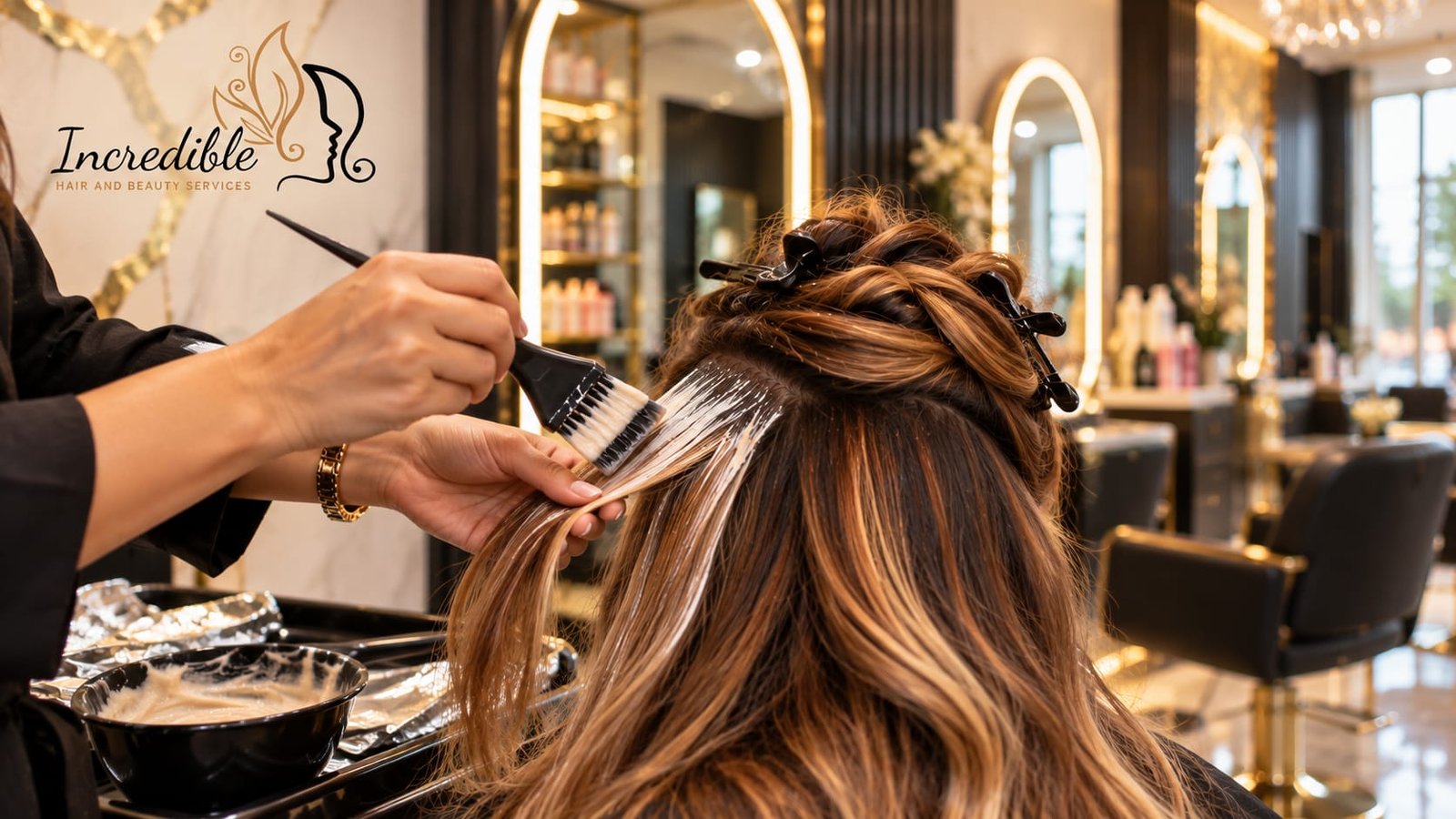
Balayage is a hand-painted colouring technique, rather than the traditional foiling used for classic highlights. Because the colour is placed just off the root and concentrated through the mid-lengths and ends, there’s no hard regrowth line as your hair grows out. That means longer gaps between appointments and a softer, sun-kissed result rather than a stripy one.
For clients balancing work, family, and a busy calendar, that’s the real appeal. The look still reads as deliberate and polished, but it doesn’t demand a salon visit every 4 to 6 weeks the way traditional foils do.
The Shades Clients Are Asking For This Season
Butter Blonde Balayage
A warm, creamy blonde that sits between honey and beige. It’s softer than icy platinum, and far more forgiving as it grows out. Suits most warm or neutral skin tones and blends beautifully into a brunette base.
Copper & Warm Caramel Tones
Rich copper, caramel, and burnt sienna balayage are having a strong moment this season, hand-painted in soft ribbons rather than solid blocks of colour for a natural, dimensional finish. This works particularly well over a dark brunette base.
Glossy, Dimensional Brunette
Not every client wants to go lighter. Deep espresso and soft mocha brunettes, lifted with subtle caramel or chocolate balayage for dimension, are just as on-trend, and arguably the lowest-maintenance option of all three.
How to Choose a Shade That Actually Suits You
The trend itself matters less than whether a shade works with your natural colouring. A few starting points:
- Warm skin undertones (gold, peachy, olive) generally suit butter blonde, caramel, and copper balayage.
- Cool skin undertones (pink, blue-red) often suit ash-toned blondes or cooler brunettes better than warm copper tones.
- Current hair condition matters as much as the shade. Lightening services always work best on hair that’s in good condition, so a consultation will usually cover whether any prep or a gentler approach is needed first.
This is exactly what a free consultation is for: your colourist can see your natural base and skin tone in person and recommend a shade before any colour is mixed.
What Happens During a Balayage Appointment
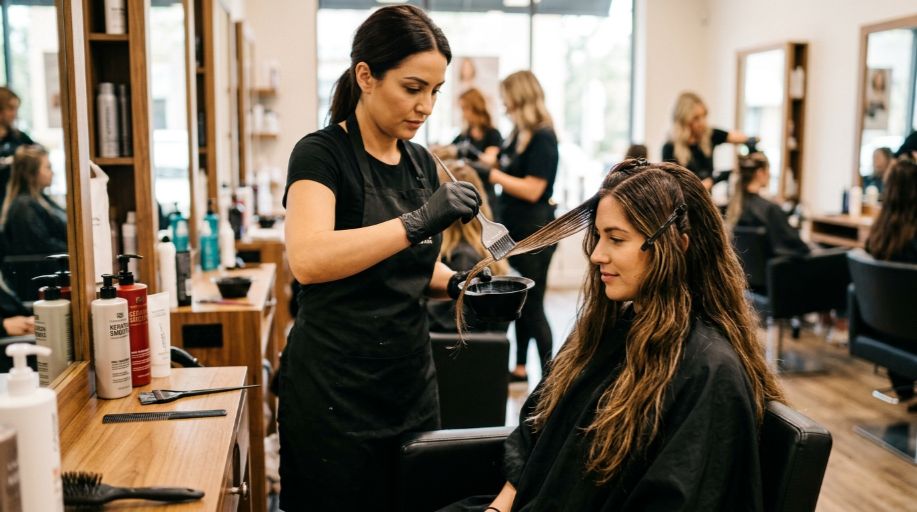
Balayage is applied freehand with a tint brush, painting colour directly onto sections of hair rather than wrapping them in foil for the entire length. This lets your colourist control exactly how much lightness is placed and where, which is why the result looks soft and natural rather than uniform. Appointments typically run longer than a single-process colour, since the hand-painting itself takes more time and precision than sectioning hair into foils.
Maintenance & Aftercare
Balayage is designed to stretch between appointments, but a few habits protect the result and keep it looking fresh for longer:
- Use a sulfate-free shampoo and conditioner made for colour-treated hair.
- Space washes out where possible. Over-washing fades lightened tones faster.
- A gloss or toning treatment every 6 to 8 weeks keeps warm tones from turning brassy between full colour appointments.
- Most clients return for a full balayage refresh every 3 to 4 months, considerably longer than the 4 to 6 week cycle traditional highlights need.
Frequently Asked Questions
Is balayage suitable for dark or black hair?
Yes. Balayage on dark bases typically uses caramel, chocolate, or copper tones for dimension rather than attempting a dramatic lift, which also keeps the result lower-maintenance.
How long does a balayage appointment take?
Generally longer than a single-process colour appointment, since hand-painting each section takes more time than foiling. Your colourist can give you an accurate estimate at booking based on your hair length and the look you want.
Will balayage damage my hair?
Any lightening service carries some risk to hair condition, which is why a consultation beforehand matters. Your colourist can recommend a gentler approach or a bonding treatment if your hair needs it.
How is balayage different from traditional highlights?
Traditional highlights are foiled from root to tip for a more uniform result with a visible regrowth line. Balayage is hand-painted, usually starting away from the root, which is what gives it that soft, natural grow-out.
Can I go from balayage back to a solid colour later?
Yes. Balayage doesn’t limit your options going forward. Most clients can transition to an all-over colour or a different technique at a future appointment.
How do I stop my blonde balayage from turning brassy?
A purple or blue-toned shampoo between salon visits helps neutralise brassiness, alongside a professional gloss or toner every 6 to 8 weeks.
Book Your Colour Consultation
Whether you’re after butter blonde, warm copper, or a dimensional brunette refresh, a free consultation is the best way to find the shade that actually suits your skin tone and hair condition. Book an appointment or call us on 02 8798 1555 to get started.
Share
Related posts