Quick answer: Healthy hair comes down to three things: minimising damage from heat and chemical processing, keeping your scalp genuinely clean and balanced, and using products suited to your specific hair type rather than generic ones. Regular trims, gentle brushing, and protecting hair from sun and chlorine matter more day-to-day than any single miracle product.
Most “healthy hair tips” lists repeat the same five generic points without explaining why they matter or what to actually do differently. This guide covers the real fundamentals, a practical day-to-day routine, and the mistakes that quietly damage hair over time even when you think you are taking care of it.
What Actually Makes Hair Healthy?
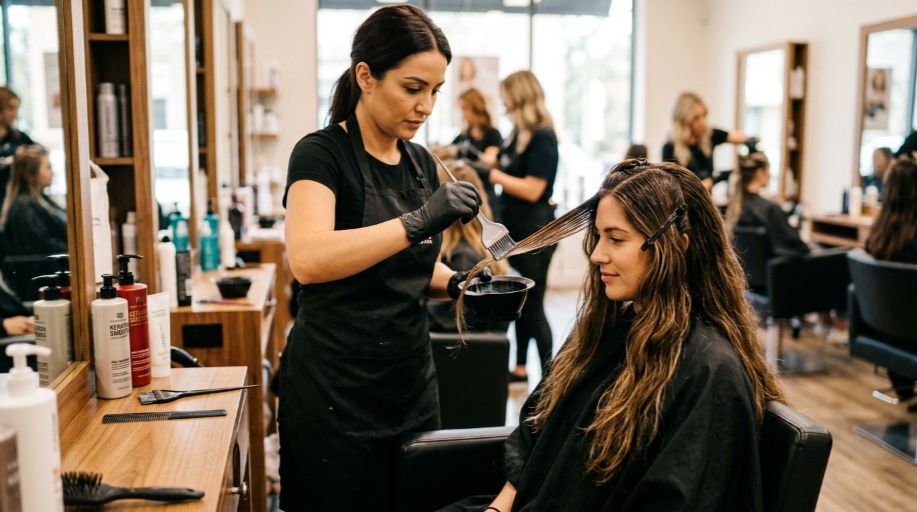
Healthy hair is really about protecting the hair shaft outer cuticle layer and keeping the scalp — the skin the hair grows from — in good condition. Damage to either shows up as dryness, breakage, dullness or slow-looking growth, even though the hair itself is not actually growing slower, just breaking off before it gets long.
The Cuticle Layer
Think of the cuticle as overlapping scales along each strand. Heat, chemical processing and rough handling lift these scales, letting moisture escape and light scatter unevenly — which is what makes damaged hair look dull rather than shiny.
Scalp Health
A balanced scalp — not too oily, not too dry, free of product buildup — supports stronger hair growth from the root. Scalp issues are often the real cause behind hair that seems to be thinning or growing slowly.
How Do You Keep Your Hair Healthy Day to Day?
- Wash with lukewarm, not hot, water — heat strips natural oils and roughens the cuticle
- Brush gently, starting from the ends and working up, rather than dragging a brush from root to tip through tangles
- Use a heat protectant every time you use styling tools, not just “when it matters”
- Sleep on a silk or satin pillowcase, or loosely tie hair back, to reduce overnight friction
- Protect hair from chlorine and salt water with a leave-in conditioner or by rinsing immediately after swimming
What Is a Good Hair Care Routine for Healthy Hair?
Washing
Two to three times a week suits most hair types — washing daily can strip natural oils, while washing too rarely lets product and oil build up and weigh hair down.
Conditioning
Focus conditioner on the mid-lengths and ends, not the scalp, and use a weekly deeper treatment or mask if hair feels dry or has any colour or heat processing history.
Styling
Lower heat settings do less damage over time than high heat used briefly — most styling tools do not need their highest setting for most hair types.
How Often Should You Get a Trim for Healthy Hair?
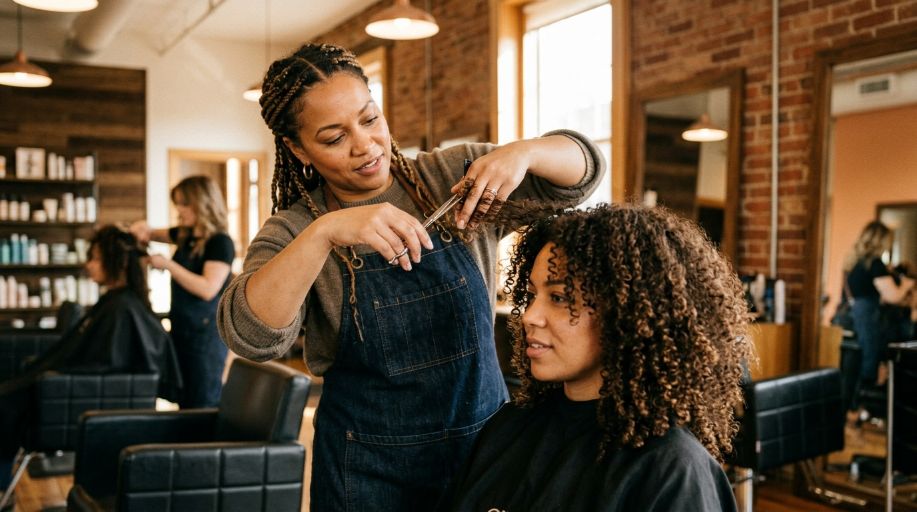
Every 8 to 12 weeks for most people, even if you are growing your hair out. Trims remove split ends before they travel further up the strand and cause more breakage — skipping trims to “save length” often backfires, since untreated split ends split further and you end up cutting off more eventually.
Common Hair Care Mistakes That Damage Hair
Over-Washing or Under-Washing
Both extremes cause problems — over-washing strips oils, under-washing lets buildup smother the scalp.
Skipping Heat Protectant
Even “quick” styling sessions without protectant add up in cumulative cuticle damage over months.
Brushing Wet Hair Aggressively
Hair is at its most fragile when wet — use a wide-tooth comb or wet brush, gently, rather than a standard brush.
Tight Hairstyles Worn Constantly
Regularly wearing hair in tight ponytails or buns can cause traction stress at the hairline over time — alternate with looser styles.
Professional Treatments That Support Hair Health
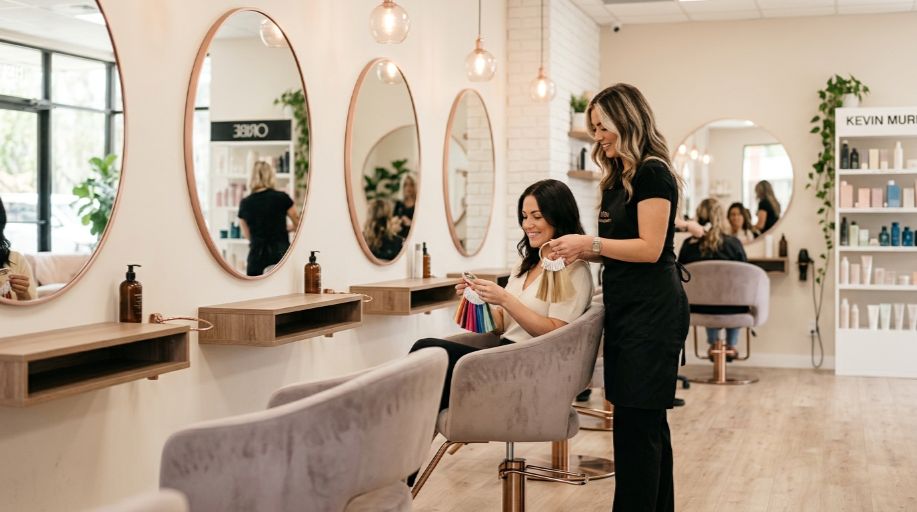
Alongside home care, professional treatments can meaningfully support hair health between appointments. Deep conditioning treatments restore moisture that daily styling depletes, while professional colour services done with ammonia-free formulas cause noticeably less damage than repeated at-home box dye. If you wear hair extensions, keeping up with maintenance appointments protects your natural hair just as much as it keeps the extensions looking good.
Frequently Asked Questions
How can I get healthy hair fast?
nThere is no genuine overnight fix — hair that is already damaged needs consistent care over weeks to months to show real improvement, since you are working with existing growth, not regrowing it instantly.
What foods help with hair health?
nProtein, iron, zinc and omega-3s support healthy hair growth from within, since hair is largely made of protein. A generally balanced diet does more than any single “superfood.”
Does trimming hair make it grow faster?
nNot directly — hair grows from the scalp, not the ends. Trimming prevents breakage from split ends travelling upward, which is why regularly trimmed hair often looks like it is growing faster, even though the growth rate itself is unchanged.
Is cold water actually better for hair?
nLukewarm is a good practical middle ground — very hot water strips oils and roughens the cuticle, while a cool final rinse can help hair look shinier by smoothing the cuticle down.
How do I know if my scalp is unhealthy?
nPersistent itchiness, flaking, excess oiliness soon after washing, or hair that feels thin at the roots can all point to scalp issues worth addressing with a professional rather than just switching shampoos repeatedly.
Can stress actually affect hair health?
nYes — significant stress can push more hairs than usual into a shedding phase, which is often noticed as increased hair fall a few months after a stressful period.
Do I need different products for coloured hair?
nYes — colour-safe, sulphate-free formulas help colour last longer and cause less additional dryness than standard shampoos on chemically processed hair.
Want a Professional Assessment?
If your hair needs more than a routine adjustment, a professional consultation can identify what is actually going on. Book an appointment at our Liverpool or Merrylands salon for a proper hair and scalp assessment.